Feel The Wave

Where you begin your personal growth journey.

Author: feelthewave2022

  • You Are Not One-Dimensional: Escaping Identity Foreclosure

    Identity foreclosure happens when an individual commits to a single identity. It is most commonly seen in college students who choose one career path before exploring different opportunities. Over time, when that path no longer fulfills them, they begin to feel trapped. The career they chose becomes their identity, making it difficult to let go. Their sense of self becomes tied entirely to their work.

    This is also common among young athletes who experience a career-ending injury. Their sport becomes all they know—or at least what they believe they know. They identify only as athletes, and when that identity is taken away, depression often follows.

    As individuals, we must be careful not to fall into the trap of believing we are one-dimensional. Most people have a job—one that may consume a large portion of their time, but not all of it. Outside of work, there are other interests, passions, and roles. What occupies most of your time does not define you. Every part of you does.

    You are a son or daughter, a brother or sister, a parent, a friend, a colleague, a professional, an athlete, a musician. We can be many things at once, and all of them shape who we are. It is often observed that the most successful people are those who try on multiple identities. They explore and shift identities rather than accepting one simply to meet expectations or please others.

    They do not put all their eggs into one basket. They explore who they are and discover new aspects of themselves along the way. They are not afraid of failure because failure does not define them. Knowing who they are allows them to see the world as full of opportunity and learning.

    Do not allow yourself to remain stuck in a single dimension. Be curious. Explore what else you can become. No one remains the same person their entire life—even if they try to.

    Take care.
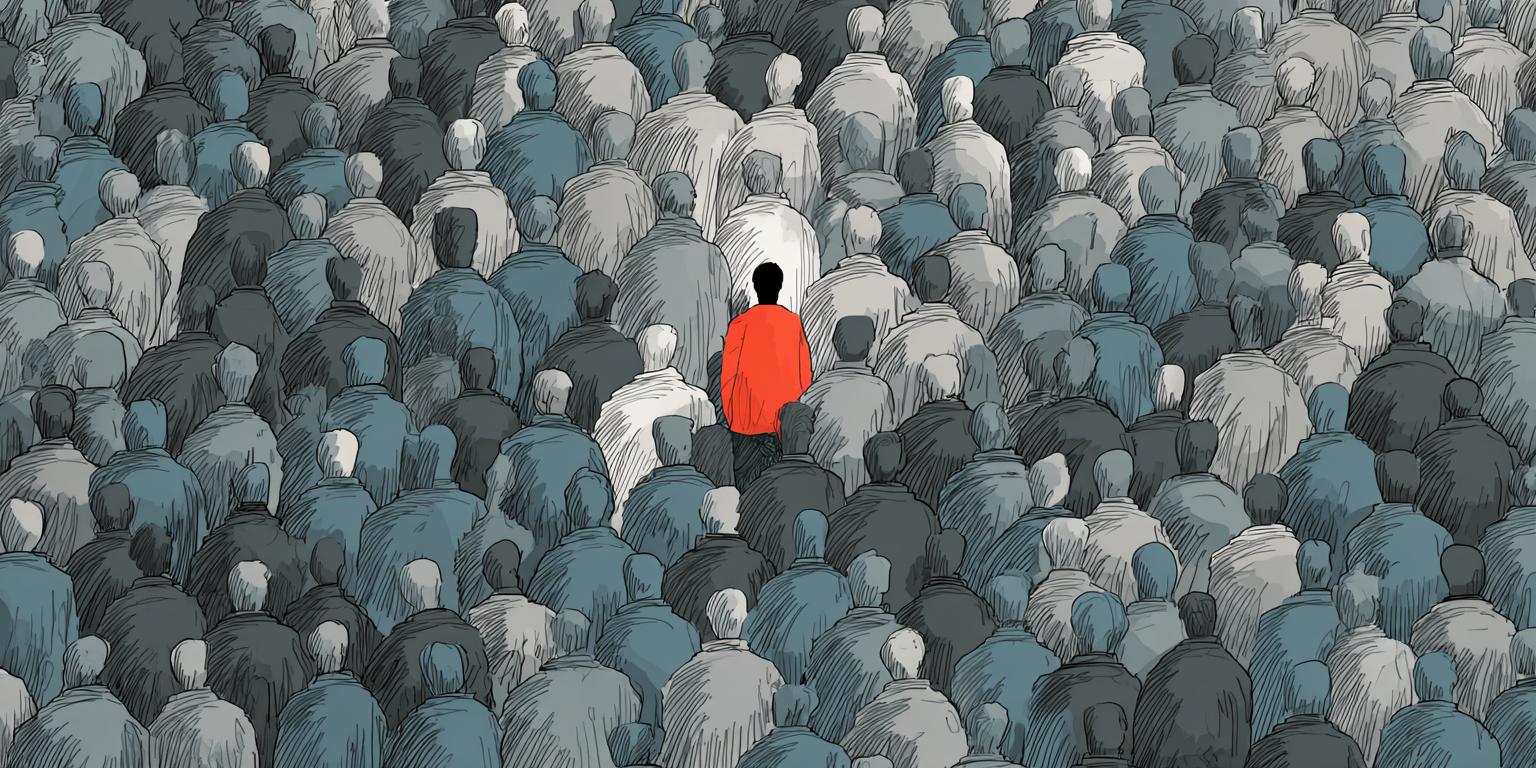
  • Useless Knowledge: When Learning Doesn’t Lead to Wisdom

    We all know someone who seems to know a little about everything. They are trivia wizards. That’s impressive—but is it something everyone should strive for?

    Seneca wrote about people who knew countless facts—dates, names, and who did what first—but referred to this as useless knowledge. He questioned the value of knowing so much if it doesn’t help you become a better person or contribute to the lives of others.

    This idea becomes even more important when we think about how we learn in modern life.

    It’s good to know some things, but knowing a little about everything without developing depth in anything is pointless. Instead, we should focus on what excites us and commit to learning it deeply.

    We shouldn’t be learning to impress others, but to build knowledge that helps solve real problems—and to develop the wisdom to explain it clearly. Harry Truman once said, “Not all readers are leaders, but all leaders are readers.”

    Leaders aren’t reading to impress others. They read to better themselves and to find ideas they can apply in their own lives. They don’t read simply to make small talk at events or dinner parties. They read to become better leaders, friends, spouses, parents, and citizens.

    We should read to learn and grow—anything else is wasted.

    The next time you’re reading, ask yourself how you can apply what you’ve learned.

    Take care. 

  • Not Everyone Will Agree With You—And That’s Okay

    Not Everyone Will Agree With You—And That’s Okay

    It’s impossible to get everyone to like you. No matter what you do or say, someone will see things differently. You can be the kindest person, and someone will still find a reason not to like you. There are simply too many personalities in the world for everyone to agree with you.

    This is exactly why you shouldn’t focus too much on those who don’t see your point of view. In many cases, it’s a waste of time. That said, it’s still important to remain open to different perspectives. Some people may disagree with you and still offer valuable insight. Those voices shouldn’t be ignored just because they challenge you.

    It becomes a waste of energy when you focus on petty disagreements. Quite frankly, this can become a form of neglect toward the people who support you. You end up giving more attention to those who don’t care for you than to those who genuinely do. The more visible or successful you become, the more this dynamic will grow—more people will support you, and more people will disagree with you.

    If you’re fortunate enough to have a strong circle or a growing audience, don’t get trapped in negativity. Not everyone deserves your attention.

    It’s important to remember that, from their perspective, people believe they are right. Your role is to filter what’s useful from what isn’t. Reject what adds no value, and let it go. But when criticism is constructive—no matter where it comes from—accept it and use it to grow.

    As Ryan Holiday often highlights, distractions are part of life. They always have been, and they always will be. In many ways, they can even be a sign that you’re doing something meaningful.

    What matters most is staying true to yourself.

    Take care.

  • How Being Organized Makes You a Better Leader 

    How Being Organized Makes You a Better Leader 

    Anyone who has looked for something misplaced will tell you the same thing—it’s frustrating. We misplace things because there isn’t a system or a designated space for them. Systems are created through organization, and as a leader, this is critical.

    Being organized allows you to access information quickly and focus on what truly matters. Here’s how organization strengthens your leadership.

    Better Time Management

    If you aren’t organized, you waste time searching for things instead of doing meaningful work or moving on to higher priorities. This quickly leads to frustration.

    For example, as a leader, if your project notes are scattered—some on a legal pad, others on loose paper, and some stored digitally—you’ll constantly scramble to understand progress and identify where your input is needed.

    Clearer Prioritization

    Organized leaders prioritize better.

    When you’re organized, you can focus on the overall direction of your team instead of getting lost in the details. Organization gives you the freedom to step back and think strategically rather than constantly reacting.

    Stronger People Management

    Organization helps you see the bigger picture.

    It allows you to connect different pieces of work, ask better questions, and ensure that all projects align with the same end goal. With clarity, you can identify potential risks early and address them before they become real problems.

    Reduced Burnout

    A never-ending to-do list often signals a lack of organization.

    Many tasks exist simply because systems aren’t in place. While searching for notes may seem minor, those small moments of stress accumulate over time—throughout the day, the week, and the year.

    Eventually, this erodes your enjoyment of work.

    Organization shifts you from being reactive to proactive, helping you regain control and reduce unnecessary stress.

    Create an Organized Workspace

    As the proverb says, “A place for everything, and everything in its place.”

    A leader should maintain a clutter-free environment. A clean space supports a clear mind, allowing you to focus on meaningful work instead of distractions.

    Make it a habit to spend the last 15 minutes of your day tidying up. This simple routine sets you up for a strong, focused start the next morning.

    Protect Your Focus

    Organization also applies to how you work.

    Set aside time for deep, uninterrupted work. Turn off notifications on your phone and computer—few things disrupt focus more than constant alerts.

    There are countless ways to get distracted. Identify yours, then remove, reduce, or manage them intentionally. Protecting your focus is one of the most effective ways to improve productivity.

    Take Goal Setting and Planning Seriously

    Goals define direction. Planning defines the path.

    Taking action reveals whether your plan works.

    Together, these create a blueprint for success. Just as importantly, they help you identify what doesn’t belong—allowing you to eliminate distractions and stay aligned with what truly matters.

    Organization naturally follows when your goals and plans are clear.

    Conclusion

    Organization is a foundational leadership skill.

    It allows you to manage time, work, and people more effectively. While each person must find their own system, the benefits remain the same—greater clarity, better decisions, and improved performance.

    Don’t underestimate its impact.

    Take care. 

  • Envy: The Mirror We Avoid

    Envy: The Mirror We Avoid

    What is envy?

    Envy is the desire to have what someone else has. It exists on a spectrum between longing and spite.

    On one end, there is longing—wanting what others have without wishing them harm. This type of envy can resemble admiration and even fuel motivation. On the other end, there is spiteful envy—wanting not only what others have, but wishing they didn’t have it at all.

    Envy often stems from attraction, wealth, or competence.

    Why do we envy others?

    We envy others because we believe we should have what they have—or that we deserve it more. But to truly understand our envy, we must ask ourselves a difficult question:

    If we deserve it, can they deserve it too?

    This is where the mind resists. Accepting that both of us may deserve something forces us into comparison. We begin measuring ourselves against others, fearing judgment, and quietly wondering if they are better than us.

    Instead of appreciating what we have, we fixate on what others possess. And when we cannot feel happy for someone else’s success, it often reveals something deeper—something unresolved within us. We avoid confronting it because we are afraid of what we might find.

    When are we envious?

    We are most envious when something in our own lives feels incomplete. If we envy another couple’s relationship, it may reflect gaps in our own. Perhaps we haven’t communicated our needs, yet we expect to feel the same level of happiness we see in others—without doing the work required to get there.

    The same applies to wealth and competence. Seeing someone purchase a new car, for example, might trigger envy. But the real question is: Do we truly want it—or are we reacting to our own financial stress or insecurity? Often, we project outward instead of looking inward. We focus on others rather than addressing what is missing in ourselves.

    Who are we envious of?

    We are rarely envious of celebrities or distant figures. Instead, we envy those closest to us—friends, colleagues, and people within our social circle.

    Why? Because we see them as our equals.

    We believe we are on the same path, the same level, the same “ladder.” And when someone moves ahead, we compare. We measure. We question. But when we are secure in ourselves, that comparison fades. We can recognize their success without diminishing our own worth. We stay focused on our own journey.

    Where does envy exist?

    Envy lives in the mind. It is internal, often invisible to others, and shaped by our own perceptions. While it may show itself externally, the real work must happen within. Sometimes, external conversations are necessary—but only after we’ve done the internal reflection.

    Conclusion

    Everyone feels envy. It is part of being human. Envy often points to something missing—something we haven’t addressed. Instead of resisting it, we should examine it. Because the way forward isn’t outside of us—it’s within. We hold the door. We decide whether to open it.

    Take care. 

  • Happiness Isn’t What You Think: A Simpler Path to Fulfillment

    Happiness Isn’t What You Think: A Simpler Path to Fulfillment

    Everyone has their own definition of happiness. While we may share similarities, our perspectives differ because of our unique upbringings and life experiences. Today, social media further shapes—and often distorts—what happiness looks like, depending on what we consume.

    What Does It Mean to Be Happy?

    There are fundamental truths we must embrace to experience happiness.

    It begins with learning to live with what we have and cultivating simple pleasures. Happiness is found in what is already within reach:

    • Someone holding the door open
    • A stranger buying you a coffee
    • A genuine compliment

    These small moments matter more than we think.

    Acts of kindness are not just gestures we receive—they are powerful when we give them. When we create space for happiness, even the simplest act of kindness can shift our entire state of mind.

    The Illusion of External Happiness

    We often believe happiness comes from big, expensive things—a vacation, a new car, or jewelry. While these may bring temporary joy, they can also mask deeper emotions like sadness, anger, or disappointment.

    Instead of facing those feelings, we sometimes cover them with quick, external fixes. We chase purchases that make us feel important or validated, but only for a moment.

    True happiness cannot be built on avoidance.

    As Dr. Becky Kennedy explains, the more we learn to regulate difficult emotions—frustration, disappointment, envy, and sadness—the more space we create for happiness. These emotions are signals, not obstacles. Ignoring them only delays growth.

    Happiness emerges when we understand ourselves fully—the good and the bad. Self-awareness and resilience are essential to enjoying life.

    Happiness and Purpose

    Happiness is deeply connected to purpose.

    When you know your purpose—whether it’s being a parent, leading a team, helping others, or being a great neighbour—you gain direction. You know what matters. You understand what to prioritize and when to say no.

    Progress toward your purpose brings fulfillment, and fulfillment fuels happiness.

    Without purpose, it’s easy to feel lost. Life becomes overwhelming without a clear focus. You may begin to question everything and feel like the world is working against you.

    If you feel this way, start by getting to know yourself. What brings you joy? That joy is often a signal pointing toward your purpose.

    A Simpler Path to Happiness

    Enjoy what is in front of you.

    Don’t let social media define happiness for you.
    Don’t overlook the power of small moments.
    Don’t ignore what you feel.

    Practice kindness.
    Understand yourself.
    Pursue your purpose.

    Progress in that direction leads to fulfillment—and fulfillment leads to lasting happiness.

    Take care.

  • Becoming a Leader: Lessons I Learned as a First-Time Manager

    Becoming a Leader: Lessons I Learned as a First-Time Manager

    Self-improvement begins with rejecting the fixed mindset of who we are.

    Becoming a leader for the first time can be intimidating. You feel a cascade of emotions—somewhere between anxiety and excitement. This is completely normal. On one hand, this may be something you’ve been working toward, and someone has placed their trust in you by hiring you. On the other hand, you don’t yet know who you are as a leader because you’ve never formally done it.

    This was my experience when I became a manager five years ago. Here’s what I’ve learned so far.

    At first, I didn’t know what to do. I knew the work inside and out, having spent seven years in the field. But managing employees—that was something I had never done, and quite frankly, never saw myself doing.

    Growing up, I was never the leader in team sports or at school. I was usually the one who followed—or, at times, the second in command. But leading the way? Not me.

    So I asked myself why.

    After some reflection, I realized I didn’t want to fail. Being responsible for others made that fear even heavier. I wasn’t just afraid of failing—I was afraid of being responsible for other people.

    And the truth is, it is terrifying.

    Being responsible for a team in a work environment, especially for the first time, comes with weight. Managing employees isn’t just about delegating and coaching. It’s about relationships, trust, and well-being. This is people’s livelihood. You have the power to hire, to say no, and even to let someone go.

    That reality is not light.

    The hiring process, in particular, troubled me at first. I kept asking myself:
    “What if the person I hire doesn’t fit in or isn’t able to do the work? Is that on me? Does that make me a bad manager?”

    The same thoughts applied to performance. If the team didn’t meet its goals, was it my fault?

    To some extent, yes.

    As a manager, it’s my responsibility to guide, coach, and elevate the team. It’s my role to create an environment where people can succeed. And more importantly, to inspire them to work with me—not against me.

    But over time, I realized something important.

    Most of these worries were unnecessary.

    By being honest with my team, I discovered that they weren’t just relying on me—I could rely on them too. Showing vulnerability didn’t weaken my leadership; it strengthened it. It showed that I didn’t have all the answers, and that their support mattered.

    Comfort and trust matter.

    If your team doesn’t feel comfortable around you, how can you expect them to perform at their best?

    Everyone is different. The more you understand your team members—both at work and outside of it—the better you can support them. You begin to set realistic expectations, and you learn where to challenge them so they grow.

    This doesn’t happen overnight. It’s trial and error. I didn’t get it right the first time—and I still don’t always get it right.

    And that’s part of leadership.

    It’s a continuous process of learning, adjusting, and improving. Mistakes are not exceptions—they are part of the journey.

    One of the biggest lessons I’ve learned is that leadership lives in the small things.

    It’s not about grand gestures or big recognition. It’s about the simple thank-yous, the pleases, and the quiet words of encouragement. It’s about connection.

    Above all else, the most important lesson I’ve learned is this:

    Be yourself.

    I’m not trying to look or act like a manager. I am a manager. And for me, that means leading as myself.

    Take care.

  • The Multitasking Illusion: Why Doing More Gets You Less

    The Multitasking Illusion: Why Doing More Gets You Less

    In some cases multitasking is seen as a skill. People seem to be producing more but it’s actually an illusion. 

    Someone who seems to be doing multiple tasks at once is actually changing from one task to another. It will take them more time to complete these tasks compared if they would focus on one task, complete the task and move on to the next one. 

    Why? It takes time to adjust your mental setting when you switch between tasks. Your memory needs to adjust to the different work, and pinpoint where you left off. In some cases, you’ll need to familiarize what you previously completed. 

    Evidently, the more complex task will require more mental capacity and in turn, take longer start we you left off. Therefore, you spend more time on preparation. This means that humans were not built to multitask. 

    Distractions disrupt focus

    Even slight distractions can waste time because we lose our train of thought. The pop up email in the corner of your screen can be the thing that derails your flow. Your eyes shifting slightly because you’re curious who sent the email. When you come back to your main task, you need to regain your focus and find where you left off. Minimize distractions by closing every chat software and put your phone away when doing deep work. 

    There’s not only adjusting your mental setting when multitasking but also a lot of cognitive load on the brain. Think of multitasking as having multiple softwares open on a computer. The more you have open and engaged, the slower the computer will be. The brain is similar. The more you think about, the slower you’ll be able to process each individual thought. Even worse, you may get confused and eventually overwhelmed that you’ll shut down. 

    Types of multitasking

    You may be thinking multitasking on simple tasks is efficient but switching between task multiple time adds up even if it only takes you a second to refocus. It will not only take you more time but you’re more prone to errors. You’re better off completing one task and moving on to the next. 

    So, how many things can someone do at once? The answer is one. Get your mind focused on a particular thing for an amount of time. Use methods such as time blocking to help you focus on one task. 

    All of this doesn’t mean you can’t work on multiple projects in one day. You just need to work on something for an hour, take a 5 minute pause, then work on something else for an hour. 

    Remember, switching between tasks within a short period of time may seem more productive but it’s actually takes longer and more apt to errors. If you only focus on one tasks, you’ll definitely be more productive compared to if you were doing two or three things at once. 

    Take care. 

  • You Are What You Repeatedly Do: Why Habits Shape Your Growth

    You Are What You Repeatedly Do: Why Habits Shape Your Growth

    How Do We Get Better?

    We practice.

    There is no other way to improve our skills, knowledge, or patience. We must take the time to do the things we want to improve at—every single day.

    With consistent practice, improvement is inevitable. Effort doesn’t determine if we get better—it determines how fast we do.

    Consistency Over Intensity

    If we train for a marathon by only walking, we will progress more slowly than if we train by running—even if both are done consistently.

    But alternating between the two creates better results than inconsistent running alone.

    Because in the end, it’s not about perfection—it’s about the habit of showing up and doing the work.

    Small actions, repeated daily, build momentum. And over time, they become easier.

    As Zeno of Citium, founder of the Stoic school of philosophy, said:

    “Well-being is realized in small steps, but it is truly no small thing.”

    The Cycle of Growth

    When you start with something difficult and work at it every day, it eventually becomes easier.

    Then comes the next step: choosing something harder. And suddenly, it feels difficult again.

    This is where most people stop.

    They reflect on their decisions and begin to question whether they should continue or quit. We hesitate because we expect things to get easier permanently—but growth doesn’t work that way.

    Improvement is a cycle: hard things become easy, and then we choose new hard things if we want to keep moving forward.

    Adopt the Beginner’s Mindset

    Each time we move to a more difficult level, we must adopt a beginner’s mindset.

    Nothing feels easy when it’s new.

    Let go of the need to feel like an expert. Because in truth, no one ever fully is—there is always something more to learn.

    Return to the Basics When Needed

    If you find yourself at a standstill, it may be because you’ve moved too far from the basics.

    Return to your foundation. Strengthen it.

    Make learning a habit—and growth will follow.

    You Are Your Habits

    As Will Durant, in his study of Aristotle, wrote:

    “We are what we repeatedly do. Excellence, then, is not an act, but a habit.”

    Your habits shape your actions. Your actions shape your results.

    And your results shape who you become.

    Take care.

  • The Plateau: Why Progress Stalls and How to Push Through

    The Plateau: Why Progress Stalls and How to Push Through

    There comes a point in every growth journey where progress stagnates. You’ve reached a stage where improvement is no longer visible—at least not as quickly as before. The energy you invest no longer matches the results, and that can feel unsettling.

    You begin to question everything.

    Is it worth it?

    Will I actually get better?

    This shift in thinking creates two problems.

    First, you stop doing as much as you did in the beginning. Your focus shifts from the work itself to measuring your progress—and that distraction slows you down.

    Second, you begin comparing where you started to where you are now. But that comparison is flawed. You’re not the same person, and the work is no longer the same. Early growth is fast and exciting. At the plateau, growth becomes a grind.

    This is where resilience takes over.

    You must resist the urge to look back and instead focus on what’s ahead.

    Taking time to audit your milestones can help. It gives you clarity on your direction and whether adjustments are needed. Goals evolve, and refining them is part of the process. Once you’re aligned, you can reflect—not to doubt yourself, but to recognize how far you’ve come.

    From there, the only variable left is time.

    Set a plan. Create constraints. Without some level of urgency, progress stalls. When you commit to a deadline, you create accountability—and you’re far less likely to let yourself down.

    Eventually, something shifts.

    The plateau begins to turn into an incline. Progress becomes visible again, and with it comes momentum. You start to feel proud of the changes you see within yourself.

    But this isn’t a one-time experience.

    Plateaus don’t happen once—they happen repeatedly. Which means everything that got you through it before must be applied again. Growth has no finish line.

    You grow by accepting that you don’t know everything.

    By staying curious.

    By maintaining a beginner’s mindset.

    Stay humble. Stay focused on what matters.

    Progress will stall again—that’s part of the journey. When it does, keep moving forward.

    You’ll push through it.

    Take care.